
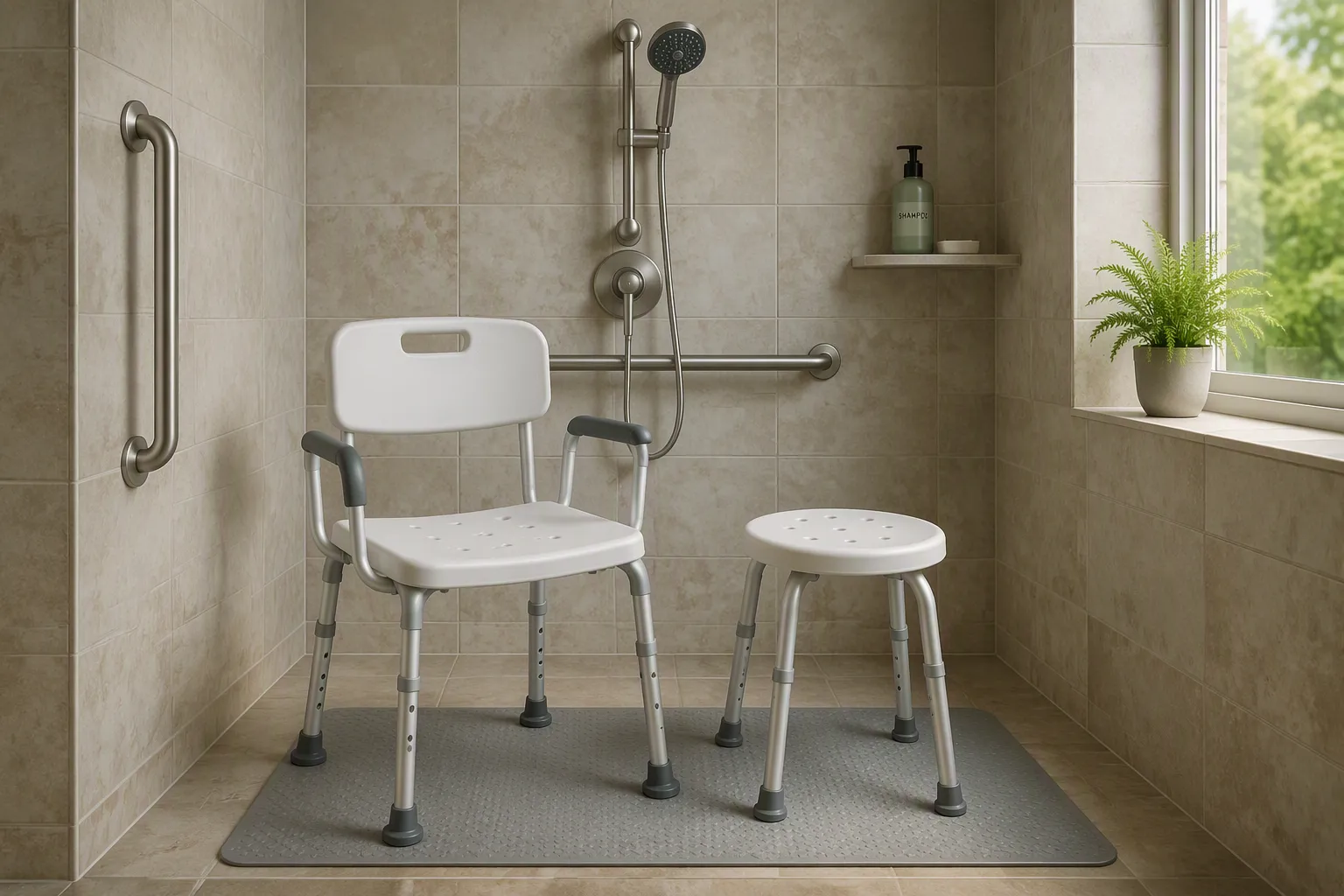
Picture two seats. One is a simple stool with no back or armrests. The other includes a back and armrests. The safer choice between a shower chair vs. shower stool depends on your balance, strength, and mobility. Neither is ‘better’ overall. Both options lower your risk of falls versus standing. Bathroom safety improves with either seat. More support means more security. Face mobility challenges? Choose the chair. This practical, judgment-free guide prevents injuries by helping you match the seat to your needs. You can stay independent and safe while bathing. The right seat keeps you steady from start to finish.
Key Takeaways
Shower stools are simple seats without back or arm support. They work for people with mild balance issues.
Shower chairs have backrests and armrests. They provide more stability and reduce fall risk.
Choose a stool if you can sit and stand without help. Choose a chair if you feel dizzy or weak.
Shower chairs and benches offer more support than stools. More support means more safety.
Measure your shower space before buying. Stools take less room than chairs or benches.
Check the weight limit of any seat. Pick a seat that holds more than your weight.
Clean your shower seat weekly with mild soap and water. This prevents mold and mildew.
Medicare usually does not cover shower chairs. Check your insurance before you buy.
What Is a Shower Stool?
Basic Design
A shower stool is a simple seat with no backrest and no armrests. You sit on a flat or slightly contoured platform. Your feet rest on the floor of the tub or shower. The stool gives you a place to sit while water runs over you. It does not hold your body in place. You must balance yourself.
The design stays minimal on purpose. A stool has a seat, four legs, and sometimes a small handle. Nothing else comes with it. You step into the shower, sit down, and wash. When you finish, you stand up and step out. The stool stays where you put it. This simple shape makes a stool easy to move and easy to store.
Who Uses a Stool
A stool works well for mild balance needs. You might feel tired after a long day. You might want to sit while you shave your legs. You might have a minor injury that makes standing uncomfortable. In these cases, a stool gives you enough help. You still have good strength in your legs and core. You can steady yourself without armrests.
A stool offers less support than a chair. You cannot lean back or push up on armrests. If you lose your balance, nothing catches you. For this reason, a stool suits people who can sit and stand without help. It does not suit people who feel dizzy or weak. You should choose a chair if you need extra stability.
Common Materials
Many stools use low-quality plastic and metal. The plastic seat may crack over time. The metal legs may rust in a wet bathroom. These materials keep the price low. They also shorten the life of the product. You may need to replace a cheap stool within a year or two.
Better stools use rust-resistant aluminum or sturdy composite plastic. These materials handle moisture well. They resist mold and mildew. They also hold more weight. Check the label before you buy. Look for a weight capacity that fits you. A well-made stool lasts longer and keeps you safer in the shower.
What Is a Shower Chair?
Basic Design
A shower chair is a seat that typically comes with a backrest and armrests. The backrest supports your spine while you sit. The armrests give you a place to push up when you stand. This design offers more support than a simple stool. You can lean back and relax during your shower. You can also grip the arms for balance.
Chairs come in two main types. A movable chair sits on the floor of your tub or shower. You can lift it out when you need the space. A permanently installed chair mounts to the wall or floor. It stays in place and handles more weight. Both types provide steady seating. A typical model measures 17.75 inches across the seat and 16.75 inches deep. The seat height adjusts from 17 to 21 inches. The back adjusts from 31.5 to 35.5 inches from the floor.
Who Uses a Chair
A chair suits people with limited mobility or balance problems. You might feel dizzy when you stand. You might have weak legs or a recent surgery. You might use a walker or cane outside the bathroom. In these cases, a chair keeps you safe. The backrest and armrests reduce your risk of falling. You can sit down, wash, and stand up with confidence.
A chair also helps caregivers. You can assist a family member without straining your back. The chair holds your loved one in a stable position. This makes bathing easier for both of you. A chair provides more comfort and stability than a stool. That extra security matters when your balance is not reliable.
Key Add-Ons
Many chairs include features that improve safety and ease of use. A padded seat feels softer on your skin. A cutout in the seat helps with personal cleaning. Non-slip feet grip the floor and prevent sliding. Some chairs fold flat for storage. Others include a handheld shower attachment. These add-ons make your routine simpler and safer.
You can also find chairs with adjustable legs. You set the height to match your body. This reduces strain on your hips and knees. A chair with a high backrest supports your neck and shoulders. A chair with removable armrests fits tighter spaces. Each feature solves a specific problem. Choose the add-ons that match your daily needs.
Shower Chair vs. Shower Stool: Key Differences
Size and Seating Area
Size plays a major role in your choice. A shower chair typically measures about 17.75 inches across the seat and 16.75 inches deep. That footprint fits most standard tubs and stalls. A shower bench takes up much more room. Many benches stretch 24 to 32 inches wide. Some models reach even longer. That extra width gives you more seating area. You can shift your weight or set down supplies. A shower bench also lets you stretch your legs. This helps if you have stiff joints or long legs.
A shower chair stays compact. You can tuck it into a corner when you finish. A shower bench commands a larger footprint. You need open floor space to use one well. Measure your shower before you buy. A bench that fits a walk-in shower may not fit a standard tub. A chair works in tighter spots. A stool takes up the least room of all. It has no back and no arms. That small shape makes a stool easy to place. It also means a stool gives you the least seating area. Think about your body size and your space. Match the seat to both.
Support and Stability
Support separates these products more than any other factor. A shower chair offers more support and stability than a stool. The backrest holds your spine in line. The armrests give your hands a solid grip. You can push down on them to rise. That motion takes strain off your knees and hips. A stool provides none of this. It is a simple seat without back or arm support. You must balance your whole body on your own. That demand grows harder with age or injury.
Stability also depends on the base. A quality shower chair uses wide-set legs and non-slip feet. Those feet grip wet tile and resist sliding. A shower bench often mounts to the wall for extra strength. Some benches carry weight limits above 400 pounds. A basic stool holds far less. It may wobble on uneven floors. A stool also tips more easily. You have no armrest to catch yourself. A chair or bench keeps you centered. That design lowers your fall risk. Choose more support when your balance feels unsure.
Portability and Storage
Portability matters in a shared bathroom. A shower chair is smaller and easier to store than a shower bench. You can lift a lightweight chair out of the tub after each use. Many models weigh under 10 pounds. Some fold flat against a wall. A shower bench is heavier and bulkier. Moving one takes more effort. A tub bench often stays in place. That permanence suits one user. It frustrates a household with many bathers.
A stool wins on pure portability. Its simple frame lifts with one hand. You can stack it in a closet or slide it beside the toilet. A shower chair still moves with ease. A shower bench demands dedicated space. Consider who shares the bathroom. Consider how often you rearrange the room. A folding chair or a compact stool solves tight storage. A fixed bench suits a private, spacious shower. Weigh the trade-off between room and convenience. Pick the option that fits your daily routine.
Purpose and Ideal Users
Stool for Mild Balance Issues
A stool works best for people with mild balance issues. You can stand without help. You can walk without a cane or walker. You simply feel unsteady after standing too long during bathing. The stool gives you a place to rest. You sit down to wash your legs or shave. You stand up when you finish. This works well for minor fatigue or slight dizziness.
A stool does not offer back or arm support. You must control your own body. You need good core strength and steady legs. If you have these qualities, a stool serves you well. It takes up little space. It costs less than a chair. Many people use a stool after a minor injury or during recovery from surgery. They regain strength quickly. Their balance returns. The stool helps them stay safe during that short period.
A stool suits a person who bathes independently. You do not need someone to help you while you bathe. You can enter and exit the tub or stall on your own. The stool simply removes the risk of standing on a wet surface. That single feature prevents many falls. You get a safe perch without a bulky frame. Choose a stool when your mobility is good and your balance is only slightly off.
Chair for Limited Mobility
A shower chair fits a different user profile. You might have limited mobility that affects your daily life. You might use a walker or cane to move around your home. Your legs might feel weak when you stand. Your balance might be unreliable even on dry floors. In these cases, a stool does not provide enough safety. You need a chair with a backrest and armrests. The backrest holds your spine in a comfortable position. The armrests give you leverage to stand up safely. This design reduces fall risk significantly. You can sit down and rise with confidence every time.
A shower bench serves a similar purpose. You might prefer a bench if you need extra space. A bench lets you stretch your legs out in front of you. It also lets you sit with your legs outside the water stream. This helps people with joint stiffness or limited range of motion. A bench provides the same stable platform with a longer seat. You can shift your weight more easily from side to side. You can also place toiletries beside you on the bench.
These products make bathing easier for anyone with significant balance challenges. You do not need to brace yourself on the wall. You do not need to worry about slipping on wet tile. The chair or bench holds you steady from entry to exit. You can focus on washing your body without fear. You can enjoy a safe, relaxing time each day. The design gives you confidence and independence. You reduce your risk of a fall that could lead to hospitalization.
Matching Seat to Needs
How do you decide which seat fits you? Start by assessing your own abilities. Consider how you feel when you stand for five minutes without moving. Consider whether you need help getting up from a low chair in your living room. Consider whether you have fallen in the past year. These questions guide your choice.
Use this simple rule. If you have mild balance issues, choose a stool. If you have limited mobility, choose a chair. A stool suits active users who just need a brief rest. A chair suits anyone who needs extra security during the entire bath. A shower bench suits people who want more room or who need to stretch their legs. Match the seat to your current ability, not your past ability. Your safety depends on this honest assessment. You can always switch to a different seat later if your needs change.
Comfort and Support
Back and Arm Support
A backrest changes how your body feels during a shower. The backrest holds your spine in a natural line. Your muscles relax instead of working to keep you upright. Armrests add another layer of comfort. You rest your forearms on them while you wash your hair. You push down on them when you stand. That push spares your knees and hips. A stool offers none of this. You balance on a flat seat with nothing behind you and nothing beside you. Your core works the whole time. For short washes, that effort feels fine. For longer ones, fatigue builds. A shower chair with a back and arms removes that strain. You sit back, breathe, and wash at your own pace.
Seat Size and Height
Adjustable Height
Seat height decides how easy your shower feels. A seat that sits too low forces you to squat. A seat that sits too high leaves your feet dangling. Both positions strain your body. Look for a shower chair with adjustable legs. A typical model adjusts from 17 to 21 inches. That range fits most adults. Set the height so your feet rest flat on the floor. Your knees should bend at a comfortable angle. Your hips should sit level with your knees or slightly above. Test the setting before you rely on it. A quick adjustment takes seconds. The right height protects your joints every time you bathe.
Contoured vs. Flat Seats
Seat shape affects comfort in subtle ways. A flat seat gives you a simple, even surface. It works well for most users. A contoured seat curves to match your body. The dip in the middle keeps you centered. Some contoured seats include a front cutout. That cutout helps with personal cleaning. A textured surface adds grip and reduces sliding. Think about your daily routine. If you sit for long periods, a contoured seat feels better. If you share the seat with others, a flat seat suits more body types. Either shape works. Pick the one that matches how you bathe.
How Support Affects Safety
Support and safety go hand in hand. Every point of contact lowers your fall risk. A backrest stops you from tipping backward. Armrests give your hands a firm anchor. Non-slip feet keep the frame steady on wet tile. A shower bench adds even more room to shift your weight. These features matter most when your mobility is limited. Weak legs and poor balance make standing risky. A supported seat removes that risk. You sit instead of wobble. You push up with your arms instead of your knees. That simple change prevents accidents. More support means more security. Choose the seat that matches your needs, and bathe with confidence.
Space and Portability
Small Bathroom Fit
Your bathroom size decides which seat works best. A stool takes the least floor space. It has no backrest or armrests. You can tuck it against a wall or in a corner. The small footprint leaves room for other items. A chair needs more room. The backrest and armrests add width and depth. You need space to place it comfortably. Always measure your tub floor before you buy. A typical chair measures about 17.75 inches across. That fits most standard tubs. A shower bench requires even more space. You need open area to sit and move. A compact seat also prevents the room from feeling cluttered.
A tight bathroom demands careful planning. You cannot fit a large seat in a small stall. You must keep room for your body and the water flow. A stool solves this problem with its narrow design. You slide it into a small space easily. A chair with removable armrests offers another solution. You take off the arms to fit tighter corners. Some chairs also have a compact frame. Look for models designed for small bathrooms. You can also install a wall-mounted folding seat. It takes zero floor space. Your comfort depends on proper fit. A cramped seat causes frustration. Choose the size that matches your bathroom.
Tub vs. Walk-In Area
A standard tub creates a different situation than a walk-in stall. You step over the tub wall to enter. A stool sits inside the tub floor. You lower yourself onto it after you step in. A shower bench often works better for tub entry. Some benches straddle the tub wall. You sit on the bench outside first. Then you swing your legs over the wall. This method reduces strain. A tub bench fits this setup perfectly. You avoid stepping over a high wall while unsteady. A walk-in stall has no wall to climb. You walk straight in. A stool or chair sits on the flat floor. You choose based on your needs. The height of the tub wall also matters. A high wall makes entry harder.
A walk-in stall offers more flexibility. You can place any seat inside. A chair with armrests stabilizes you during entry and exit. A stool works if your balance is good. The open floor makes movement easier. A tub with a bench keeps you safer during transfer. You do not lift your leg high. You slide across the seat instead. Your specific mobility level shapes the right choice. Always test your entry path. The seat should not block your movement. Safety starts with clear access.
Weight and Storage
Weight affects how often you move the seat. A stool weighs very little. You lift it with one hand. You can hang it on a hook or store it in a closet. This portability helps when you share a bathroom. You remove the stool after each use. Everyone gets a clear space. A folding shower bench solves a common storage problem. You collapse the frame flat against the wall. The seat opens only when you need it. This design saves floor space.
Think about your daily routine. Do you need to move the seat often? Choose a lightweight stool or folding chair. Do you have a dedicated bathroom for one user? A heavier bench stays in place without issue. Storage matters in small bathrooms. A stool slides under a sink or behind a door. A chair takes up more space when stored. Some chairs have a removable seat and back. You separate the parts for easier storage. A folding model also supports travel. You pack it in a car for trips. Weigh the convenience against your available space. The right balance keeps your bathroom functional and safe.
Durability and Maintenance
Wet-Space Materials
Your seat lives in a wet environment. The material you pick decides its lifespan. Aluminum resists rust effectively. It handles daily water exposure without corroding. Quality plastic seats also perform well. Composite plastic withstands years of moisture. Some seats use teak wood instead.
Teak’s natural oils don’t just repel water—they also discourage the growth of mold and mildew.
This makes teak a premium choice. It looks warm and natural. It stays safe from mold growth. A teak stool costs more upfront. It lasts longer too. A shower chair with an aluminum frame and plastic seat offers a practical balance. The frame stays rust-free. The seat resists moisture damage. You get a durable product for daily use. A shower bench uses similar materials. The frame supports more weight. Always check the material label before buying. Match the material to your bathroom conditions.
Cleaning and Mildew
You must clean your seat regularly. A simple routine prevents mildew. A shower bench needs the same consistent care.
Cleaning Solution | Recommended Frequency | Notes |
|---|---|---|
Mild soap and water | At least once a week; daily rinse after each use | Safe for regular cleaning; avoid abrasives |
Baking soda paste | As needed for tougher stains | Apply gently; do not use bleach or ammonia |
Avoid bleach or ammonia | Never recommended | Can discolor or damage solid plastic |
The table guides your cleaning method. Mild soap and water work for daily care. You rinse the seat after each use. This prevents soap buildup. It stops mildew spores from growing. A baking soda paste handles stubborn stains. Apply it gently with a soft cloth. Never use bleach or ammonia. These chemicals damage plastic. They weaken the material over time. A well-maintained seat is easy to clean. You save effort with consistency. A weekly cleaning keeps the seat looking new. It extends the product life.
Rust and Wear
Rust appears on metal parts over time. Steel frames rust faster than aluminum. Chrome-plated steel also wears down. The coating cracks. Moisture reaches the metal. Rust spreads from these spots. You prevent this with simple steps. Dry the seat after each use. Wipe the frame with a towel. Keep your bathroom ventilated. Open a window or run a fan. Lower humidity helps your seat last longer.
Wear shows on other components too. Rubber caps flatten over time. Non-slip feet lose their grip. Replace them when they feel smooth. Plastic seats may crack after extended use. Weight limits affect this wear. A seat with a higher weight rating lasts longer under lighter loads. A bench uses stronger frame materials. It handles more weight than a basic stool. The frame stays sturdy for years.
Choose materials that match your bathroom. Rust-resistant aluminum works best. Quality plastic seats hold up well. Teak adds natural mold protection. Pick the material that fits your needs. Your seat stays safe and functional for years.
Cost and Insurance
Typical Price Ranges
Prices change a lot depending on materials, features, and brand. A basic plastic stool costs the least. You might pay a small amount for a simple seat with four legs. A mid-range chair with a backrest and armrests costs more. The added support and adjustable legs raise the price. A heavy-duty shower bench sits at the top of the range. Its larger frame and higher weight capacity explain the cost. You can also find premium models made from teak or rust-resistant aluminum. These materials last longer and resist mildew. Expect to pay more for these durable options. Your budget should match your needs. A simple stool works for mild balance issues. A chair or bench serves limited mobility. Spend according to your safety requirements.
Insurance and Medicare
Original Medicare Part B does not cover shower chairs. The program classifies them as convenience items rather than medically necessary durable medical equipment. Medicare Part A may cover a chair during a hospital or skilled nursing facility stay. Wheeled shower chairs may qualify if a provider deems them medically necessary. Commode chairs that work in the shower may also qualify. When Medicare covers a chair as DME, it pays 80% of the approved amount after you meet the Part B deductible.
You need specific documentation for coverage. A written order from your treating physician must state the medical necessity. The order must link the equipment to your specific diagnosis. Your physician must document that you cannot safely use regular toilet facilities. Medical necessity may apply if you are confined to a single room or one level of your home without a toilet. Records must show why a standard alternative, such as a raised toilet seat, is insufficient. The prescription must include your name, the specific item, and the practitioner’s signature and National Provider Identifier. For heavy-duty models, documentation must specify a weight exceeding 300 pounds. You must obtain the equipment from a supplier enrolled in Medicare that accepts assignment.
Budget vs. Long-Term Value
A low price does not always mean a good deal. Cheap plastic and metal parts crack and rust quickly. You may replace a bargain stool within a year or two. That repeated cost adds up over time. A higher upfront price often buys better materials. Rust-resistant aluminum and composite plastic handle moisture well. They resist mold and mildew. They also hold more weight. A well-made chair or shower bench lasts for years. You save money by avoiding replacements. You also gain better safety. A sturdy seat stays stable on wet tile. A flimsy one may wobble or tip. Think about your daily use. If you bathe alone every day, invest in quality. The long-term value outweighs the initial savings. Choose a seat that keeps you safe and lasts.
Safety Considerations

Fall Risk and Balance
Your balance affects your fall risk more than any other factor. A stool requires you to keep yourself upright. You sit on a flat surface with nothing to hold. Your core muscles must work to stop you from tipping. This works fine for people with good balance. It becomes dangerous when your balance is unsteady. The debate over shower chair vs. shower stool comes down to this single point.
A chair changes this dynamic. The backrest stops you from falling backward. The armrests give your hands something to grip. You steady yourself without effort. This design reduces your chance of falling during a bath. A fall in the tub often leads to serious injuries. A chair helps you avoid that outcome. Bathroom safety depends on matching the seat to your balance.
Many people wonder about built-in seats. These seats come with your bathing area when you install it. They look convenient. They are usually not the safest option. A built-in seat is often too narrow. It may not have armrests. It may sit at a fixed height that does not fit your body. A portable chair or a fold-down bench gives you more control. You adjust the height. You pick the width. You add armrests. This flexibility makes a portable option safer for most people. A built-in seat works only if it matches your exact needs. Most do not.
Weight Capacity and Stability
Every seat has a weight limit. You must check this number before you buy. A stool often holds less weight than a chair. A basic stool may support 250 pounds. A sturdy shower bench can hold 400 pounds or more. Exceeding the weight limit damages the frame. It increases your risk of collapse. Do not guess your weight. Weigh yourself and compare it to the seat rating. Add a buffer. A seat rated for 300 pounds works for someone who weighs 250 pounds. This buffer protects the frame over time.
Stability depends on more than weight capacity. The base design matters too. A chair with wide-set legs stays planted on the floor. A stool with narrow legs tips more easily. Your movements during a bath test this stability. You reach for soap. You lean to wash your feet. You shift your weight. A stable seat handles these motions. A wobbly one does not. More support from a wider base means more security during use.
Non-Slip Feet
Non-slip feet are a critical feature. These rubber caps grip the wet floor. They stop the seat from sliding when you sit down or stand up. A seat without non-slip feet can move during use. This movement startles you. It can cause you to lose your balance.
Check the feet before every use. Push the seat gently. Does it slide on the tile? Replace the feet if they feel smooth or worn. Many manufacturers sell replacement caps. Keep a spare set in your bathroom. This small part plays a big role. Do not overlook it.
Anti-Tip Design
Anti-tip design prevents the seat from flipping over. A stool has a higher center of gravity. You can tip it if you lean too far to one side. A chair with a wider base lowers this risk. Some models include cross braces or a reinforced frame. These features add stability.
Test the seat before you use it regularly. Sit down and shift your weight from side to side. Does the seat feel solid? Does it wobble? A wobble means the floor is uneven or the legs need adjustment. Fix this before you rely on the seat. A stable seat gives you confidence. You move freely without fear of tipping.
When a Chair Is Safer
A chair is generally safer than a stool. This statement holds true for most users. The backrest and armrests give you more points of contact. Each point of contact reduces your fall risk. You do not need perfect balance to use a chair safely. You can lean back and relax. You can push up with your arms to stand. These actions become difficult or impossible on a stool.
The safer choice depends on your specific needs. Consider your mobility challenges honestly. Can you stand from a low chair without using your hands? Can you balance on one leg to step into a tub? If you answered no to either question, you need a chair. A chair provides the support your body requires. A stool does not. This extra support helps prevent serious falls during bathing.
Think about the role of these seats in your routine. A fall in the tub can break a hip or cause head trauma. These injuries change your life. A seat reduces that risk dramatically. You sit down before you wash. You stay seated during the entire bath. You stand only when you are ready. This routine eliminates most fall scenarios. Shower seats serve this critical purpose.
A tub bench serves a similar purpose. It sits across the tub wall. You transfer onto it from outside the tub. Then you swing your legs over. This method removes the need to step over a high wall. A tub bench provides the same stability as a chair. It suits people with very limited mobility. A shower bench also works well for walk-in stalls. Both options give you reliable support.
Your goal is simple. Choose the seat that keeps you safest. A stool works for mild needs. A chair or bench works for everyone else. Safety comes first. Do not compromise on this factor.
How to Choose the Best Shower Chair
Questions Before You Buy
Start with a few honest questions. Can you stand for five minutes without holding onto something? Do you feel dizzy when you rise from a chair? Have you fallen in the past year? Your answers point you toward the right seat. A shower chair with a back and arms suits anyone who answers yes to any of these questions. A simple stool works for everyone else.
Measure your space next. Check the width and depth of your tub or shower floor. A standard chair measures about 17.75 inches across. That fits most tubs. A shower bench needs more room. Confirm the weight limit too. Add a buffer above your own weight. A seat rated for 300 pounds works well for someone who weighs 250 pounds.
Guide by Mobility Level
Your mobility level decides the best fit. Mild balance issues call for a basic stool or a light chair. You can sit and stand without help. You just need a steady perch during your shower. A compact chair with a backrest adds comfort without crowding your space.
Limited mobility changes the answer. Choose a shower chair with armrests and a backrest. The arms give you leverage to stand. The back keeps your spine steady. A shower bench serves you well if you need to stretch your legs. People with severe mobility restrictions need the most support. A padded chair with a high back and non-slip feet keeps you safe. A shower bench with a transfer design also helps you enter a tub without stepping over the wall. Any of these options make bathing easier and safer.
When to Ask an OT
Sometimes the choice feels unclear. You might have a condition that changes day to day. You might recover from surgery and wonder what comes next. An occupational therapist can help. These professionals assess your balance, strength, and home setup. They recommend the right seat for your body.
Ask your doctor for a referral. Your OT can also suggest grab bars, a handheld shower head, or a bath mat. These additions work with your seat to improve safety. You do not need to solve this alone. A short visit gives you a clear plan. Then you can choose the best shower chair with confidence. You can also choose the best shower chair for a family member who needs your help. Either way, expert advice removes the guesswork.
A shower stool is a simple, compact seat. A shower chair offers more support with a back and arms. The safety rule stays simple. More support means more protection for anyone with balance or mobility challenges. Mild balance issues? A stool or light chair works well. Limited mobility? Choose a shower chair or shower bench with armrests. A shower bench also helps you enter a tub safely. Either option lowers your risk of falls. Both improve bathroom safety. You take a positive step toward safer, more independent shower routines. Pick the seat that matches your needs today.
FAQ
Can you use a regular kitchen stool in the shower?
No. Kitchen stools lack non-slip feet and rust-resistant materials. Water damages them quickly. A proper stool keeps you safe with rubber grips and waterproof construction.
How do you measure for the correct seat height?
Your feet must rest flat on the floor. Your knees should bend at a comfortable angle. Adjust the legs until your hips sit level with your knees or slightly above.
Will Medicare cover a seat for your shower?
Original Medicare Part B does not cover these seats. Medicare Part A may cover one during a hospital stay. You need a written order from your doctor.
How often should you replace your seat?
Check the frame and legs each year. Look for cracks, rust, or worn non-slip feet. Replace the seat when stability decreases or parts show damage.
Is a shower bench safer than a shower chair?
Both provide more support than a stool. A shower bench offers extra space to stretch your legs. A shower chair adds armrests for leverage when you stand.
Can you add grab bars to improve safety?
Yes. Grab bars give you extra stability during entry, sitting, and standing. Mount them on the wall next to your seat. Combine them with a stool or chair.
What material resists mold best in a wet shower?
Teak resists mold naturally. Aluminum frames and composite plastic also perform well. Clean your seat weekly with mild soap and water.