
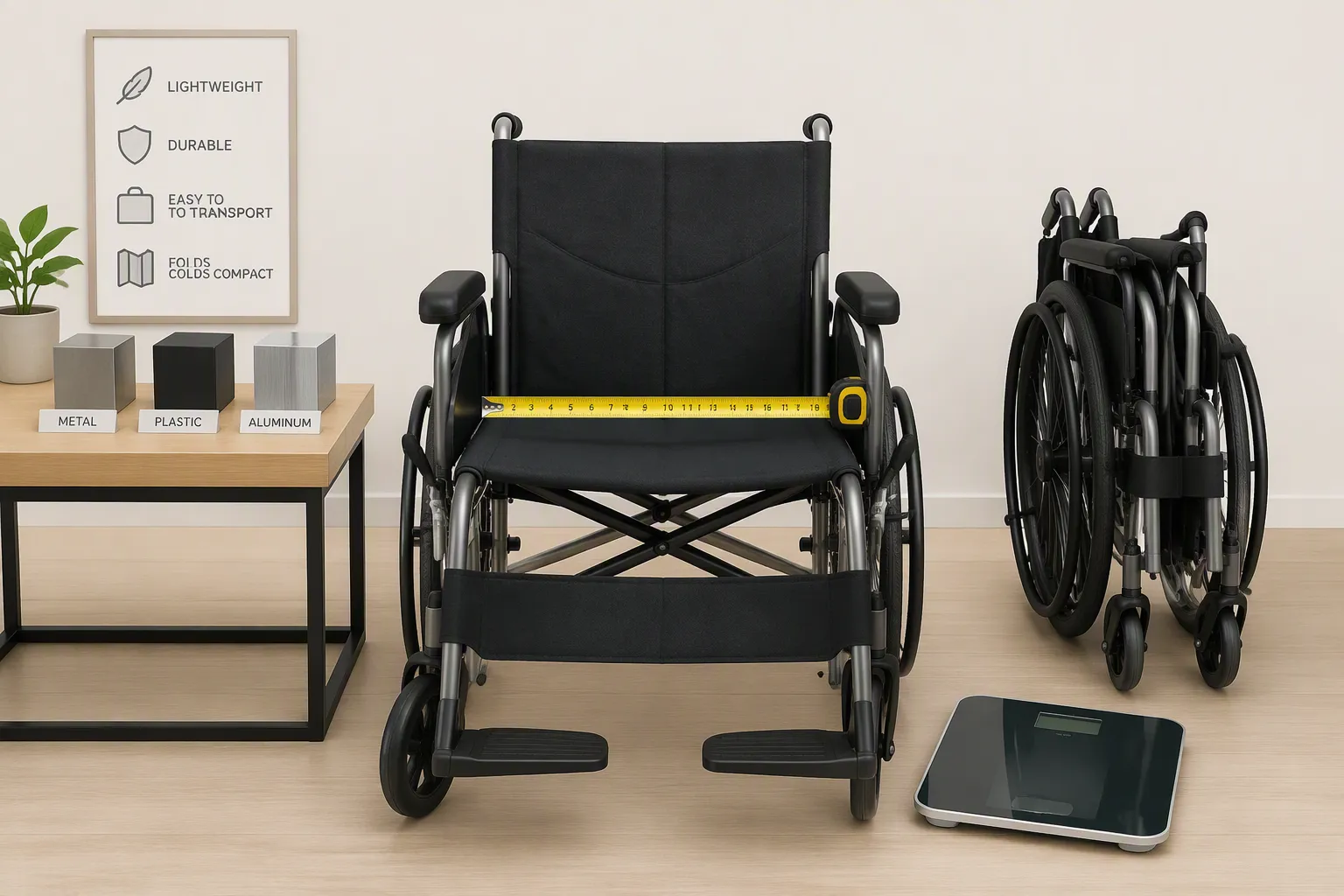
Choosing a manual wheelchair depends on four key factors: seat width, frame material, weight capacity, and portability. If you pick these right, you get comfort, safety, and daily ease of use. If you pick them wrong, every outing becomes a struggle.
This wheelchair buying guide covers those four choices. You will learn how to measure your hips, compare frame materials, figure out your total load, and see how easy a chair is to fold and lift. Each step is useful and measurable, so you can buy a wheelchair with confidence. Read this full guide before buying, and you will match the chair to your body and your daily routine.
Key Takeaways
Sit down and measure the width of your hips, then add 1-2 inches to get the right seat width.
Pick aluminum for a light frame, steel to spend less, or titanium to last a long time.
Keep your total weight (you plus your gear) at or below 80% of what the chair can hold.
Choose a chair with quick-release wheels and a compact fold so you can easily transport it.
Focus on seat width and weight capacity first, then balance frame material and portability.
Try the chair yourself: sit in it, fold it, and lift the heaviest part.
Talk to a physical therapist before you buy. They can give you advice that fits your needs.
Seat Width for a Manual Wheelchair
Seat width is the distance across the widest part of your hips or thighs. This measurement decides how well you sit, roll, and stay comfortable all day. A snug but comfortable fit is the clinical goal. Too much room causes problems just as often as too little.
Measuring Seat Width Correctly
You can measure this at home with a helper and a rigid board. The steps are simple, and you should repeat them twice to check your work.
Measuring Hip Width
Position a rigid board vertically on each side of the hips or the widest part of the thighs.
Measure the straight-line distance between the two boards.
Avoid wrapping the tape measure around the body.
Measure the widest point of your body while you sit, typically at the hips or thighs. Do not measure while standing. Your hips spread when you sit, and that changes the number.
Adding Proper Clearance
Add approximately one to two inches to allow for movement and bulky clothing such as winter garments. This is a common starting point, not a universal rule. Clothing, cushions, side supports, posture, and propulsion style can all affect the correct allowance. The seat should be wide enough to accommodate your hips. It should not be so wide that you must stretch to reach the wheels when you self-propel. The chair sides should not touch your hips, which helps avoid pressure wounds.
Risks of Incorrect Seat Width
A properly fitting wheelchair is as important as, if not more important than, the cushion itself. Improper seat dimensions or back support can create abnormal pressure points, promote sacral sitting, and increase shear, all of which can contribute to tissue breakdown.
Too Narrow vs. Too Wide
A chair that is too narrow can cause pressure sores, while one that is too wide makes it difficult to self-propel. If the seat is too wide, you will likely slump to one side, leading to spinal misalignment and shoulder strain when reaching for the wheels. Extra space lets you slide or lean, and that lack of support may lead to pressure sores or discomfort with prolonged use. A proper seat width prevents pressure points and enhances stability. Too narrow? Causes discomfort and pressure sores. Too wide? Leads to poor posture and difficulty maneuvering.
Standard and Compact Seat Widths
Standard seat widths for adult manual wheelchairs range from 16 to 24 inches, with 18 inches being the most common. That 18-inch figure fits a large share of adult users, which is why so many models ship in that size. Compact models differ by having an overall width of 22 inches or less, compared to standard overall width of 24–28 inches. That narrower profile allows easier navigation through narrow doorways and tight spaces.
Standard Range and Average
The 16-to-24-inch range covers most adults. An 18-inch seat is the average and the most stocked size. If your hip measurement plus clearance lands near 18 inches, you will find the widest selection of manual wheelchairs. Sizes at the ends of the range are less commonly stocked.
When to Choose Compact
Compact manual wheelchairs have narrower seats, making them easier to maneuver and transport than standard manual wheelchairs with wider seats. Choose a compact model when you navigate tight hallways, small bathrooms, or crowded public spaces. Compact chairs also suit users who need a non-self-propelled wheelchair that a caregiver pushes. A self-propelled wheelchair in a compact size works well for users with good upper-body strength who want to roll themselves. For users who need assistance, non-self-propelled manual wheelchairs offer a lighter frame for the person pushing. When you compare self-propelled manual wheelchairs to non-self-propelled manual wheelchairs, the main difference is the wheel size and handrims. Larger rear wheels with handrims let you push yourself. Smaller wheels mean someone else pushes. Getting seat width and depth right matters most for self-propelled users, because they rely on their arms to move. A correct fit gives enhanced comfort and protects your shoulders over years of use. Before buying, sit in the chair and check that your hips clear the sides without touching. This single test prevents most fit problems.
Frame Material for Manual Wheelchairs
The frame material shapes the weight, durability, and cost of every manual wheelchair. Aluminum, steel, and titanium each bring distinct strengths. Your daily routine and budget will point you toward the right one.
Aluminum Frames
Aluminum is the most popular frame material for manual wheelchairs. It is lightweight, widely available, and easy to service. A well-engineered aluminum frame supports substantial weight without the bulk of a steel equivalent.
Weight and Durability
Aluminum weighs about one-third as much as steel. This lighter weight means you use less energy to push the chair. It also makes lifting it into a car much easier. Aluminum also resists rust on its own, which is great for humid climates and everyday moisture. The material has a limited fatigue life under repeated stress. So long-term durability depends on tube shape, weld quality, and stress points. Many aluminum frames still work well for years with proper care. If you want the best lightweight wheelchair for daily use, aluminum is a strong starting point.
Steel Frames
Steel is the traditional choice for standard manual wheelchairs. A folding steel frame with a powder coat finish is common. These chairs often have a sufficient weight capacity for general use. Steel is generally stronger and more resistant to bending than aluminum.
Weight and Durability
Steel is heavier than aluminum. That added weight is a real disadvantage for users who need high maneuverability. Steel models are significantly heavier than aluminum models. Steel is susceptible to rust, so the powder coat finish matters for longevity. Steel frames cost less than aluminum. This makes them a popular option for budget-conscious buyers. If you need a non-self-propelled chair for a caregiver to push, steel can work well.
Titanium Frames
Titanium is a premium lightweight option with excellent durability. It offers a superior strength-to-weight ratio. This allows engineers to reduce material and use advanced design techniques. The result is a frame competitive with or lighter than many aluminum counterparts.
Weight and Durability
Titanium has superior fatigue resistance. So it holds its structural integrity under repetitive propulsion cycles. It does not rust or degrade in humid or coastal environments. Titanium also dampens vibration more effectively than aluminum. This reduces cumulative joint loading. These traits make titanium a top pick for self-propelled manual wheelchairs used over many years. The drawbacks are higher cost and harder manufacturing, which limits design flexibility. For most buyers, aluminum remains the more cost-effective choice.
Material | Weight | Durability | Cost |
|---|---|---|---|
Aluminum | Lightweight | Good corrosion resistance; finite fatigue life | Moderate |
Steel | Heavier | Strong; susceptible to rust | Lower |
Titanium | Lightweight | Superior fatigue resistance; no rust | Higher |
When you compare types of manual wheelchairs, frame material is the factor that most affects how the chair feels day to day. A lightweight manual wheelchair in aluminum or titanium will serve self-propelled users well. Steel suits users who prioritize lower cost and higher strength. Test each option in person before buying.
Weight Capacity for Manual Wheelchairs
Weight capacity is the most weight a chair can safely hold. This number is not just your body weight. It also includes everything you put on the chair.
Understanding Weight Capacity Ratings
Companies give a user weight rating for each chair. That number works for one specific setup. If you change the seat width, wheels, or extras, the rating might not be correct.
What the Rating Means
A rating applies to the whole chair. Your weight goes through the seat, back support, seat rails, side frames, cross brace, rear axles, front casters, and the ground. Every weld, bolt, pivot, and bearing on that path is important. The listed weight limit cannot be higher than the weakest tested part. In the US, the FDA classifies mechanical wheelchairs as medical devices. International standards cover strength testing for manual and powered chairs. These rules give you background, not proof that your chair passed.
Why Not to Exceed It
Going over the rating puts too much stress on parts. Frames bend, welds crack, and axles wear out faster. A failure might happen during a transfer or when going off a curb, when sudden loads are high. Never see the rating as a goal. See it as a limit.
Check the company’s rating for your exact setup and never go over it.
Calculating Total Load
Start with your body weight. Then add everything the chair will hold.
User Weight Plus Accessories
Cushions, bags, oxygen tanks, and positioning parts all add to the total. A frame-only weight is not a full chair rating. Add each extra item’s weight to yours before checking against the listed limit.
Adding a Safety Margin
Keep your total weight well below the rated capacity to allow a safety margin for everyday use. This helps prevent stress on components. This margin handles changing loads during movement, weight changes, and wear over time. It also helps parts last longer.
Standard vs. Heavy-Duty Capacities
Weight limits differ by chair type. Standard manual wheelchairs usually have a weight capacity that meets the needs of most users. There is no single standard across brands. Basic or transit chairs may have lower limits, while heavy-duty and bariatric models go above the standard range.
Wheelchair Type | Typical User Capacity |
|---|---|
Transport/Attendant | Lower capacity |
Standard Manual | Moderate capacity |
Ultralight Manual | Lower capacity |
Power Wheelchair | Higher capacity |
Standard Ranges
Most standard manual wheelchairs have a moderate capacity. Ultralight models often weigh less because makers use less material. A self-propelled chair in this class gives up some capacity for easier pushing. A chair that someone else pushes may have a similar rating with a simpler frame.
When to Choose Heavy-Duty
Pick a heavy-duty chair when your total weight is near or over the standard capacity. Heavy-duty chairs have stronger frames, axles, and wider seats. They are heavier, so they take more effort to push yourself. If you push yourself, try a heavy-duty chair before buying. Make sure the rating covers your seat width, frame type, wheels, casters, and extras. Ask about the test basis and where the report comes from when the claim matters. Changes in material, supplier, or tools should be checked before the rating is used.
Portability of Manual Wheelchairs

Portability decides if you can take your chair on trips or have to leave it behind. The frame design, weight of parts, and how it folds all affect this.
Folding Mechanisms and Frame Types
Companies make wheelchairs with two main frame types. Each one changes how you store and move the chair.
Cross-Brace Folding Frames
Cross-brace frames use a cross-brace with thick tubes for strength. They often have footrests that come off for easy storage. The drive wheels attach to separate axle housings on each side. Many transport wheelchairs fold like a lawn chair. This design makes them easy to collapse for travel. Some foldable chairs fold with one hand, which helps people with weak hands. Other chairs need more strength or skill to fold, making them harder to transport.
Rigid Frames with Removable Parts
Rigid frames are more compact because they are welded. They use less material for the same stiffness, so they weigh less. The footrests are part of the frame, and the drive wheels connect with one solid axle across the chair. Rigid wheelchairs let you remove the rear wheels easily and fold the backrest. This makes them very compact for travel. People have different likes. Some like lighter rigid frames for easy lifting and storing. Others like the folding style for easier transport and storage.
Frame Type | Folded Size | Portability |
|---|---|---|
Cross-brace folding frames | Folds compactly; fits under beds or in closets | Good — folds small for travel and works well in urban settings |
Rigid frames with removable parts | Does not fold as small; often needs wheel removal for storage | Fair — you have to take it apart for storage; better for home use where stability matters more |
Transport Weight vs. Total Weight
Transport weight is the heaviest part you have to lift. Total weight is the whole chair with everything attached. These two numbers mean different things.
Why Transport Weight Matters
Light chairs are easier to fold and lift into cars. Heavier chairs are harder to lift, store in small spaces, and carry while traveling. Even a small difference in weight can matter over time. A light chair with quick-release wheels lets you take off the heaviest part before lifting.
Check the folded weight if you plan to travel.
Lifting and Stowing
Folded chairs should be light enough to lift easily and small enough to fit in a car trunk or closet. Foldable chairs help with travel by saving space, being portable, and setting up quickly. Transport chairs often fold like a lawn chair. Their light aluminum frames make lifting, folding, and storing easy.
Features That Improve Portability
Certain features make a manual wheelchair much easier to move and store. Look for these when you compare models.
Quick-Release Wheels
Quick-release rear wheels let you take off the heaviest part in seconds. Many chairs have quick-release wheels that allow conversion from a regular chair to a transport chair. Their back release folds the backrest for quick storage. A self-propelled chair with quick-release wheels gives you big rear wheels for pushing and easy breakdown for car trunks.
Compact Folding for Car Trunks
Folding transport chairs are made to fold easily for storage and travel. They usually have a small, collapsible frame that you or a helper can fold quickly. This makes them great for car, train, or plane trips. An ultra-light aluminum travel chair folds in one motion and is very light, with sizes good for planes. When you look at folding and transport, compare light and standard chairs in weight, strength, and cost before buying. A chair a caregiver pushes may fold differently than a self-propelled chair. The best light chair for you balances these features with your daily life. Many top light chairs have quick-release wheels, removable armrests and footrests, and compact folding for car trunks. Test the fold and lift yourself before you decide.
Buying Guide: Prioritizing Your Trade-Offs
You now know the four important factors. The next step is to decide which one matters most for you. A simple framework can help you rank them. Start with the things you cannot change. Then balance the rest.
Weighing the Four Factors
Not all factors are equally important. Your body and daily life set your priorities. Use this order: seat width and weight capacity first, then frame material and portability.
Seat Width and Weight Capacity First
Seat width and weight capacity are safety needs. You cannot cut corners on them. Measure your hips while you sit. Add one to two inches of clearance. This gives you the right seat width and depth. Next, figure out your total load. Add your body weight plus all accessories. Cushions, bags, and oxygen tanks all count. Keep the total load well below the rated capacity. A safety margin protects the frame, welds, and axles from stress. If your total is over the standard capacity, pick a heavy-duty chair.
A manual wheelchair must also fit your mobility needs. You need either the ability to push yourself or a caregiver who can push. Your home must have enough door width and floor space. These things decide if the chair works in your life. Getting this right prevents pressure sores and shoulder strain.
Balancing Frame Material and Portability
After you confirm seat width and weight capacity, look at frame material and portability together. Frame material directly affects portability. Weight and folded size decide how easy the chair is to move.
Lightweight and ultra-lightweight manual wheelchairs cost more but are much easier for daily caregivers to handle. The trade-off between weight and cost is a key choice for users who travel often or need caregiver help.
Aluminum is the most common frame material. Different aluminum alloys exist, with variations in ease of fabrication and strength-to-weight ratio. Titanium gives superior fatigue resistance and no rust, but costs more. Steel is cheaper but heavier.
Material | Weight | Portability | Cost |
|---|---|---|---|
Aluminum | Lightweight | Good for most users | Moderate |
Steel | Heavier | Harder to lift and store | Lower |
Titanium | Lightweight | Excellent for frequent travel | Higher |
A self-propelled wheelchair works better with a lighter frame. Self-propelled users need to push every day. A lighter frame reduces strain. Non-self-propelled models may focus on lower cost over weight. A lightweight wheelchair serves frequent travelers well. Folding models improve portability for city travel but may not handle rough ground. Rigid models with quick-release wheels offer high stability and easy breakdown.
Final Checklist for Buying
Use this checklist before you buy. It confirms your choices.
Confirming Measurements and Ratings
Confirm seat width and depth match your hip measurement plus 1–2 inches of clearance.
Verify weight capacity includes a safety margin below the maximum rating.
Check that your home has enough access and space to move around.
Make sure you can self-propel or a caregiver is available and willing.
Review supportive features like adjustable armrests and padded seating for better comfort.
Ask about cushion options. A good cushion improves posture and reduces pressure.
This complete guide helps you avoid costly mistakes. Get personalized recommendations from a physical therapist if you can.
Testing the Fold and Lift
Test the fold mechanism. Can you fold it with one hand or two?
Lift the heaviest single part (transport weight). Is it within your strength?
Does the folded size fit your car trunk or closet?
Check for quick-release wheels and removable footrests.
A final in-person test reveals fit issues. Before you buy a wheelchair, sit in it and check the seat width and depth. Roll it a few feet. Does it feel stable? Push it with one hand. Does it turn easily? These simple tests confirm your buying decision.
The best manual wheelchairs fit your body and your lifestyle. Use this guide to make a confident choice.
Seat width, frame material, weight capacity, and portability decide how well a manual wheelchair works. Use this guide to rank what matters. First start with seat width and weight capacity. Then balance frame material with portability. The final checklist helps you confirm.
The best manual wheelchairs fit your body and daily life, not only your budget. A self-propelled user needs a light frame. A self-propelled chair rolls easily, and many manual wheelchairs have this design. A non-self-propelled chair is for a caregiver. Pick a self-propelled model for independence. Sit in the chair, fold it, and lift it. Ask a physical therapist before you buy a wheelchair.
FAQ
How do I measure seat width at home?
Sit on a firm surface. Place a rigid board against each side of your hips. Measure the distance between the boards. Add one to two inches for clearance. This gives you your seat width.
What happens if my seat width is wrong?
A narrow seat causes pressure sores and discomfort. A wide seat makes self-propelled movement hard. You may slump to one side. This leads to poor posture and shoulder strain over time.
Which frame material works best for daily use?
Aluminum is the most popular choice. It is lightweight and resists rust. Titanium offers superior durability but costs more. Steel is heavier and cheaper. Your budget and daily routine decide the best option.
How much weight can a standard manual wheelchair hold?
Most standard manual wheelchairs support a typical weight capacity. Heavy-duty models hold more. Always check the manufacturer’s rating for your exact setup. Never exceed that limit.
What is transport weight?
Transport weight is the heaviest single piece you must lift. Total weight includes the whole chair with all parts attached. A lighter transport weight makes loading into a car much easier.
Do quick-release wheels help with portability?
Yes. Quick-release wheels let you remove the heaviest part in seconds. This makes storage and travel simpler. Look for this feature when you buy a wheelchair for frequent trips.
What is the difference between self-propelled and non-self-propelled chairs?
Self-propelled chairs have large rear wheels with handrims. You push yourself. Non-self-propelled chairs have smaller wheels. A caregiver pushes those. Your upper-body strength and daily needs decide which type fits you.
Should I test a wheelchair before buying?
Always test the chair in person. Sit in it and check the seat width. Fold it and lift the heaviest part. Roll it a few feet. These simple tests confirm the fit and prevent costly mistakes.