
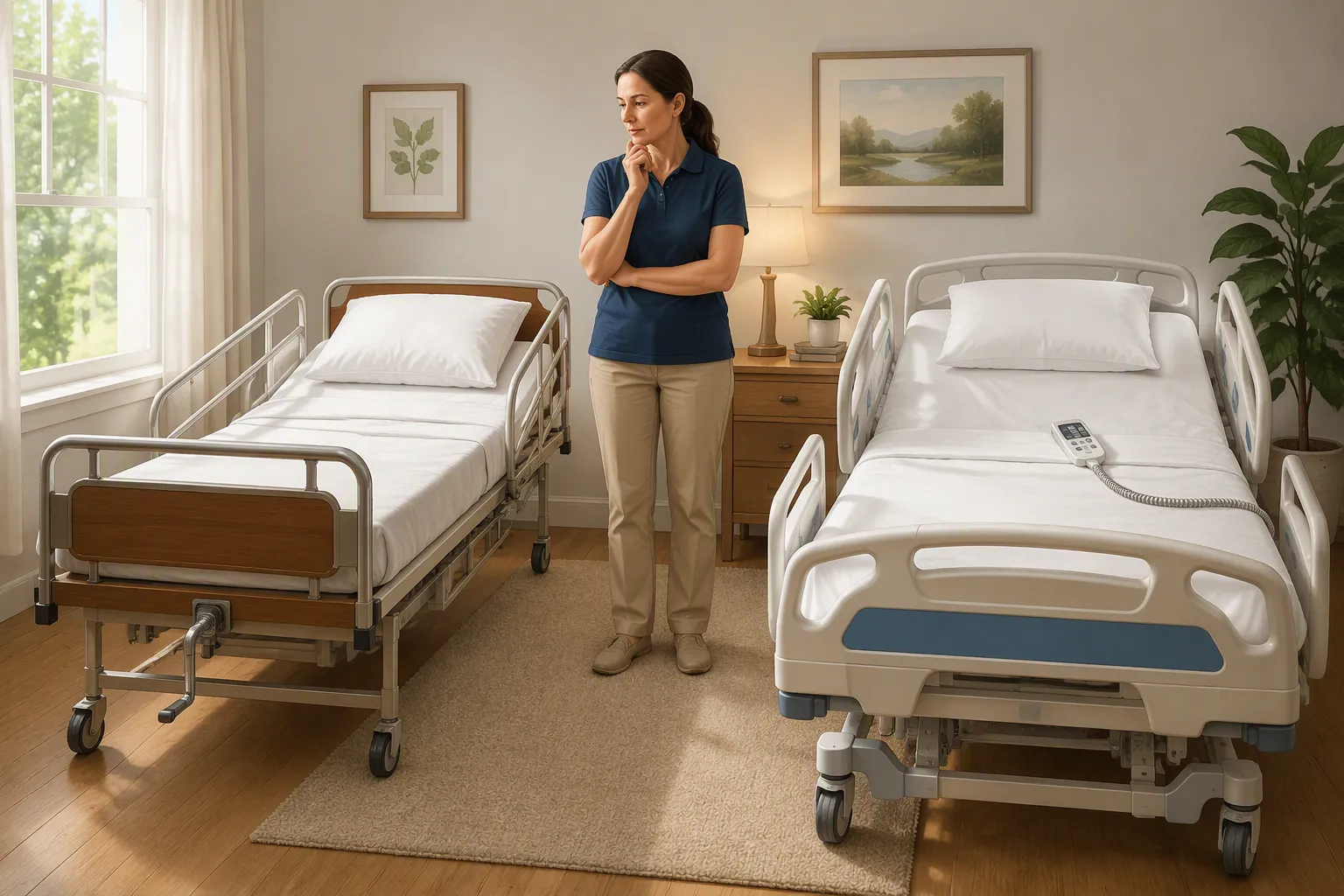
The best hospital bed for home use depends on four things: patient mobility, care duration, budget, and caregiver availability. You may worry about cost, caregiver strain, comfort, and power outages. These concerns are valid. This article compares manual vs. electric hospital beds and then offers clear scenarios for choosing each type. Rental costs show a real gap: manual beds average $100–$150 monthly, while full-electric beds run $200–$400. That difference matters for your home care budget. You will learn which beds suit short-term recovery, tight budgets, or long-term care. Use this guide as a decision-making starting point for your home.
Key Takeaways
Manual beds cost less and work without power, but you need to use your own strength to change their position.
Electric beds cost more, but they make things easier for caregivers and let patients have more control themselves.
Semi-electric beds are a middle option: the head and foot are powered, but the height is manual.
Think about how well the patient can move, how long care will last, how much you can spend, and whether a caregiver is available.
If you are recovering for a short time or have a small budget, a manual bed may be enough.
If you need care for a long time or have to move often, an electric bed is often the better choice.
Look at the safety features on any bed, such as side rails, brakes, and weight limits.
Renting a bed lets you try it before you buy it, which is useful for short-term needs.
Manual vs. Electric Hospital Beds: The Basics
To understand a manual vs electric hospital bed comparison, you need to know how each one works. Manual beds use physical cranks to adjust the head, foot, and height. Electric beds use motorized controls for these same movements. This basic difference affects cost, ease of use, caregiver strain, and patient comfort. There is also a middle option: the semi-electric bed. Knowing the manual vs. electric hospital beds differences helps you pick the right system for your home.
What Is a Manual Hospital Bed?
Crank-Based Adjustment
A manual hospital bed works with three hand cranks. One crank controls the head section. Another controls the foot section. The third controls the overall bed height. You turn each crank by hand to change positions. This method takes physical effort but needs no electricity. A manual hospital bed works during a power outage with no backup needed. The mechanical system is simple and easy to maintain. A manual hospital bed has very few electrical parts that can fail.
Simple, Durable Design
Manual hospital beds have fewer electrical parts than electric ones. This simplicity makes them durable and dependable. Fewer parts mean fewer things can break. Maintenance costs stay low. Many families choose manual hospital beds for short-term recovery situations. The rugged design handles daily use without complicated repairs. The safety profile is simpler, with fewer electrical risks to manage.
What Is an Electric Hospital Bed?
Motorized Hand Control
An electric hospital bed uses motors to adjust the head, foot, and height positions. You press a button on a handheld pendant to activate the motors. A fully electric model powers all three adjustments electronically. You need a standard power outlet nearby. Avoid extension cords to reduce fall hazards for caregivers. These systems meet IEC 60601-1 for basic safety and IEC 60601-1-2 for electromagnetic compatibility. Modern designs also comply with IEC 60601-2-52, which addresses long-term care and home settings. A fully electric system gives you complete motorized control.
Full-Electric vs. Semi-Electric
Electric hospital beds divide into two groups: fully electric and semi-electric. A fully electric bed moves the head, foot, and height with motors. This fully electric system is the clinical standard for long-term home care. Semi-electric beds power the head and foot sections but use a manual crank for height changes. Semi-electric beds are the most common home care setup. They cover the adjustments patients use most often. The semi-electric design balances convenience and affordability. A fully electric model suits homes where height changes happen frequently.
Semi-Electric Beds Explained
Powered Head and Foot
A semi-electric bed gives you motorized control of the head and foot sections. You press a button to lift your head for reading or watching television. This adjustability improves comfort without needing caregiver help. The semi-electric design fits well when you change head and foot positions often but keep height fixed. A semi-electric bed costs less than a fully electric equivalent. This helps budget-conscious buyers. Semi-electric beds are recommended for short-term recovery after surgery or illness. A semi-electric system offers good value for standard home care needs. For many families, a fully electric model is unnecessary when height changes are rare.
Manual Height Crank
The height adjustment on a semi-electric bed uses a hand crank. A caregiver turns the crank to raise or lower the entire bed frame. This manual step works well when a caregiver is consistently available. The semi-electric bed balances electric convenience with manual cost savings. Many families find this middle option ideal for standard home care needs. A semi-electric bed offers good value when you want electric convenience without the highest price tag. The semi-electric setup is the most common home care arrangement for good reason.
Key Differences in Manual vs Electric Hospital Bed Systems

You now get how each bed type works. The next step is to compare how you control them, how easy they are to use, and what they need to stay in good shape. These key differences shape your daily life as a caregiver and your patient’s quality of living. The manual vs electric hospital bed comparison comes down to effort, cost, and how much control the patient has.
Adjustment Method and Ease of Use
Physical Effort Compared
A manual hospital bed makes you do real physical work. Each crank turn needs 9–14 lbs of force. Changing the height needs even more effort at 18–23 lbs. You have to turn the crank 18–32 times just to lift the head section. This work adds up fast. Caregivers feel 37% more tired in their upper body compared to using electric hospital beds. Getting the bed height right lowers muscle injury risk by 40%, but manual beds make that harder to keep up.
Operating manual hospital beds usually needs 18–23 lbs of force for height changes and 9–14 lbs for crank-based changes. This affects how much effort a caregiver puts in.
A fully electric model removes all this strain. You push a button. The motor does the work. For a patient who needs to change positions often, this ease of use matters a lot.
Speed and Precision
Electric beds win on speed. A hand control moves the head or foot section in just seconds. A manual crank takes much longer. Precision also favors electric models. You can stop a motor at any angle with exact control. A manual crank makes you guess the position by feel. For patient comfort, this precision helps with better positioning. The benefits of motorized control become clear during nighttime changes or sudden repositioning.
Cost and Long-Term Value
Upfront Price Gap
The price difference between these systems is big. Look at the numbers:
Bed Type | Typical Upfront Price Range |
|---|---|
Manual | $500 – $1,200 |
Semi-Electric | $800 – $2,000 |
Fully Electric | $1,500 – $4,000+ |
A manual hospital bed costs the least. A semi-electric bed sits in the middle. Fully electric hospital beds have the highest price. These ranges change by brand, features, and whether the bed is new or used.
Maintenance and Replacement
Manual hospital beds have fewer electrical parts. This simple design means fewer repairs. You replace a crank handle or a mechanical joint at low cost. Electric hospital beds have motors, wiring, and control pendants. These parts wear over time. Motor replacement costs more than a new crank. Still, a fully electric bed often lasts many years with good care. The long-term value depends on how long you need the bed. For short-term use, a manual or semi-electric bed keeps costs predictable. For long-term care, a fully electric model is worth its higher price because it works well for years.
Caregiver Strain and Patient Independence
Daily Caregiving Demands
Manual and semi-electric beds need more caregiver effort every day. You turn cranks, adjust positions, and manage height changes. This daily work adds up. The 37% more upper-body fatigue shows the real toll. A semi-electric bed cuts some of this burden by powering the head and foot sections. The height crank stays manual. A fully electric bed removes almost all physical strain from your daily routine.
Self-Adjustment Ability
Electric hospital beds let patients control their own comfort. A patient can push a button to raise the head for reading or adjust position for better breathing. This ability to adjust themselves gives real benefits:
More confidence
Better mental health
Less need for help from caregivers
Delayed or avoided move to assisted living
Kept sense of normal life at home
Raising the head of the bed lets patients do things like watch TV or use a catheter on their own. Changing height helps them get out of bed without help. Bedrails give more independence and a feeling of safety. The overall adjustable system boosts independence and lowers care burden. A patient using a fully electric bed gets more control over daily life. This independence is a huge change for patients. It lowers the physical strain on you and boosts the patient’s sense of control. The pros and cons of each bed type are now clearer. Manual beds cost less and never lose power. Electric beds lower caregiver strain and support patient independence. A semi-electric bed offers a middle path. It powers the most-used adjustments while keeping the height crank manual. Your choice depends on your specific mix of patient mobility, care duration, budget, and caregiver support.
Reliability and Safety of Electric Hospital Beds at Home
Power Outages and Backup Options
Manual Crank Override
A power outage does not trap you with a fully electric bed. Most full-electric models have a manual crank override. You turn this crank by hand to move the head, foot, or height when the motor has no power. This backup works without batteries or fuel. Test the override before you need it. Make sure the crank handle is within easy reach. A fully electric bed with a working override gives you calm during storms.
Battery Backup Features
A battery backup keeps a fully electric bed working during a power loss. Pick a battery that fits your setup. A 1,000Wh-class pure sine wave power station works well for a home electric bed used for occasional positioning. Bed motors run only a few minutes at a time, so this capacity supports many adjustment cycles. Choose a 2,000Wh-class power station when a continuously operating air mattress or low-air-loss pump shares the battery. The UDPOWER S2400 (2,083Wh, 2,400W pure sine wave, 3,000W startup, 6 AC outlets, UPS transfer ≤10 ms) covers overnight and longer outages.
Battery Class | Best-Fit Scenario | Recommended Model |
|---|---|---|
1,000Wh-class pure sine wave power station | Occasional positioning; motors run for just a few minutes at a time | UDPOWER S1200 |
2,000Wh-class power station | Air mattress pump or shared devices; covers extended outages | UDPOWER S2400 |
Do not choose the battery based only on the bed’s wattage. Check the labels and manuals for the bed frame, mattress pump, and every connected medical device. Equipment like ventilators, oxygen concentrators, and infusion pumps needs an emergency plan approved by the medical equipment provider or healthcare professional. Pure sine wave output is usually safer for electronic bed controls and pump motors, but only the equipment maker can say if a certain external power source is approved. A UPS transfer time of 10 ms or less can get you through a short outage, but it does not guarantee that every bed controller, pump, alarm, or medical device will work without resetting — test the whole setup before you rely on it.
Maintenance and Repair Needs
Moving Parts and Wear
Fully electric beds have motors, wiring, and control pendants. These parts wear down over time. Replacing a motor costs more than getting a new crank handle. Regular checks keep a fully electric bed reliable. Look at the pendant cord for cracks. Listen for strange motor noises. Lubricate moving joints as the manual says. A fully electric hospital bed that gets routine care often lasts many years.
Finding Parts and Service
Parts availability differs by brand. Before you buy, check that the maker stocks motors and pendants for your model. Ask about service near you. Some suppliers offer in-home repair. Others need you to ship the control box. A fully electric bed with local service saves you time. Keep the model number and purchase date handy. This information speeds up every repair request.
Safety Features to Compare
Side Rails and Brakes
Side rails stop falls and give the patient something to hold. Make sure rails lock firmly in place. Look for a gap-free fit against the mattress. Locking casters keep the bed from moving during transfers. Test each brake before use. These features matter most during nighttime movement. A fully electric bed with strong rails and brakes supports safer daily care.
Weight Limits and Fall Risks
Every bed has a weight limit. Stay within that number for the frame and the mattress combined. Going over it puts stress on the motors and frame. Lower the bed height when the patient gets in or out. This step cuts the fall distance. Keep the floor clear of cords and clutter. A fully electric bed at the right height lowers fall risk. The safety of your home setup depends on these small habits.
When a Manual Bed Is Best for Home Care
A manual bed works better than any motorized bed in some homes. You save money, avoid electrical problems, and keep things simple. This section shows when a manual hospital bed is the smart choice.
Short-Term Recovery Needs
Matching Bed to Care Timeline
A short recovery changes the plan. You may need a bed for a few weeks after surgery or an injury. A manual hospital bed costs less to buy and rent. You avoid paying for motors you will use for only a month. When recovery ends, you sell the bed or return the rental without losing much money.
Think about how long the patient will need the bed. A hip replacement may need six weeks of elevated sleeping. A manual bed handles that job well. You raise the head once at night and lower it in the morning. That is not much cranking. A long-term condition is different. It calls for a bed that adjusts many times a day.
Tight Budgets and Simple Setups
Keeping Costs Predictable
Manual hospital beds have fewer parts that break. You replace a crank handle instead of a motor. Repairs cost less and happen less often. This keeps your spending steady. You also skip the battery backup and power station costs that electric beds may need.
A simple setup helps too. A manual bed needs no outlet nearby. You place it in any room. Fewer cords mean fewer tripping hazards. For a home with limited space or older wiring, this simplicity matters. The manual vs electric hospital bed choice often comes down to this: pay less now or pay more for convenience.
When a Caregiver Is Always Present
Factoring In Caregiver Strength
A manual bed works when a caregiver is always nearby. That person turns the cranks and adjusts the position. The evidence supports this pattern. If a caregiver is available to help with adjustments, a manual bed may be a practical choice. Manual beds are best suited for individuals who do not need frequent adjustments or who have consistent caregiver support.
The hi-low question is the most important question. If a caregiver is performing daily care tasks at the bedside — repositioning, wound care, dressing changes, bathing — and the bed cannot raise to working height and lower for safe patient exit, the caregiver will be bending over a low bed every day. That is the leading cause of caregiver back injury in home care. If daily bedside care is part of the situation, full electric hi-low is not a luxury feature. It is the feature that keeps the caregiver healthy enough to continue providing care.
Read that warning closely. A manual bed is best for home care only when the caregiver has the strength for daily cranking. If the patient is often alone or the caregiver’s physical abilities are limited, an electric bed may be essential. Manual hospital beds offer an affordable solution for those with consistent caregiver support. Electric beds provide convenience for independence. Match the bed to your caregiver’s body, not just your budget.
When an Electric Bed Is Best for Home Care
An electric bed fixes problems that manual beds cannot. You may deal with long-term care, frequent repositioning, or little caregiver help. Electric hospital beds give you power, speed, and control. This section shows when these beds become the clear choice.
Long-Term Care and Chronic Conditions
Why Duration Matters
How long you need care changes everything. A patient who needs a bed for years faces different demands than one recovering for six weeks. Electric hospital beds handle daily adjustments without wearing you out. You press a button instead of turning a crank hundreds of times each month. Over a year, that difference protects your body from injury.
Chronic conditions like arthritis, heart failure, or paralysis require constant position changes. A fully electric bed lets you adjust the head, foot, and height in seconds. The ease of use keeps care manageable for the long haul. When you know the bed will stay in your home for years, the higher upfront cost of electric hospital beds pays off through daily reliability.
Frequent Repositioning Needs
Reducing Pressure Injury Risk
Pressure injuries happen when a patient stays in one position too long. You need to shift their body every two hours or so. A fully electric bed makes this task faster and safer. The motorized controls let you raise the head, lower the feet, and change height without straining.
A fully electric hospital bed supports better patient comfort during these turns. You can adjust the angle with precision instead of guessing. This precision reduces friction and shear on fragile skin. The benefits extend beyond the patient. Your back and shoulders face less stress with every repositioning cycle. For anyone managing pressure injury risk, a fully electric model is not a luxury. It is a tool that protects both of you.
Limited Caregiver Availability
Supporting Patient Independence
What happens when you cannot be there every hour? A fully electric bed gives the patient control over their own comfort. They can raise the head to read, lower the feet to ease swelling, or adjust height to get out of bed. This customizable comfort builds confidence and reduces dependence on you.
The patient gains more than physical ease. They keep a sense of control over their daily life. That control supports better mental health and overall quality of life. For home care situations with limited caregiver availability, electric beds offer a practical solution. The patient adjusts the bed alone. You handle other tasks. This division of labor keeps your household running. When you compare beds for this scenario, the fully electric option wins. It supports independence, reduces your burden, and delivers comfort that manual beds cannot match.
A Decision Framework for Your Home
You have the facts. Now you need a plan. Use this framework to tie patient mobility, care duration, caregiver availability, and budget together. Start with a short checklist. Ask how often the patient changes position each day. Ask how long the care will last. Ask who will help and how strong that person is. Ask what you can spend upfront and over time. Your answers point to one bed type.
Questions to Ask First
Mobility and Care Duration
Assessing patient independence and mobility comes first. A patient who moves alone needs controls within reach. A patient who needs help every two hours needs a bed that adjusts fast. Care duration matters just as much. A recovery of six weeks suits a manual bed. A chronic condition lasting years calls for electric hospital beds. Write down your timeline before you shop.
Caregiver and Budget
Considering caregiver availability shapes your choice. A strong caregiver nearby can turn cranks all day. A caregiver with back problems cannot. Budget works the same way. Manual beds cost less upfront. Electric beds cost more but save your body over time. Weigh both numbers together. Choosing based on needs and budget keeps you from overspending or underspending.
Matching Bed to Home Layout
Space and Doorways
Measure before you buy. A standard electric bed needs room to move and adjust. Check these minimums:
Requirement | Minimum Value |
|---|---|
Doorway Width | 32 inches (bed frame may swivel for passage) |
Corridor Width (for maneuvering) | 60 inches (to maneuver bed fully extended with rails up) |
You also need a grounded outlet near the bed. Most models draw 1–3 amps at 150–300 watts on standard household voltage. Skip extension cords when you can. A surge protector shields the electronics.
Trying Before Buying
Rentals and Return Policies
Renting lets you test a bed before you commit. Rental periods often run up to 11 months within a 12-month window. Purchase usually makes sense when you expect 12 months of need or more. Rentals cost less upfront and include servicing. They also let you trial a bed’s comfort and fit. Buying gives you a permanent setup with fewer customization limits.
A semi-electric bed is your middle option. It powers the head and foot. It keeps a manual height crank. This design balances cost and convenience. Many home care families find semi-electric beds ideal. Semi-electric beds cost less than full-electric models. Semi-electric beds still reduce daily strain. For many homes, semi-electric beds are the smart pick.
You now understand the main trade-off when choosing between manual and electric hospital beds. Manual beds cost less and never lose power. Electric hospital beds ease caregiver strain and help patients be more independent. Your best choice depends on patient mobility, how long care will last, your budget, and caregiver support. Use the decision framework above to weigh each factor. Think about a semi-electric bed as a balanced option. It powers the head and foot for daily patient comfort while the height crank stays manual. This design supports comfort and independence at a lower price. You have what you need to choose well for home care.
FAQ
Can you adjust an electric bed when the power goes out?
Yes. Most electric hospital beds have a manual crank override. You turn this crank by hand. It moves the head, foot, or height. Test this feature before you need it. Keep the crank handle close by.
How much does it cost to rent a hospital bed for home use?
Manual beds cost about $100 to $150 each month. Full-electric beds cost $200 to $400 each month. Semi-electric beds cost somewhere in between. Your choice affects your monthly care budget.
Is a semi-electric bed worth considering?
Yes. A semi-electric bed uses a motor for the head and foot sections. You use a manual crank to change the bed height. This mix of convenience and cost works well for many home care situations.
What size hospital bed fits through a standard doorway?
Most hospital bed frames fit through a 32-inch doorway. You may need to turn the frame at an angle. Measure your doorways and hallways before you buy.
How long does a hospital bed typically last?
Manual beds last many years with basic care. Electric models also last a long time with proper care. Motors and control pendants may need replacement over time.
Can a patient operate an electric bed without help?
Yes. The handheld pendant puts controls within easy reach. A patient can adjust the head, foot, and height alone. This independence helps with confidence and comfort during daily home care.
Do you need a prescription to buy a hospital bed for home?
A prescription often helps with insurance or Medicare coverage. Check your specific plan rules. Some sellers let you buy directly without a prescription if you pay cash.